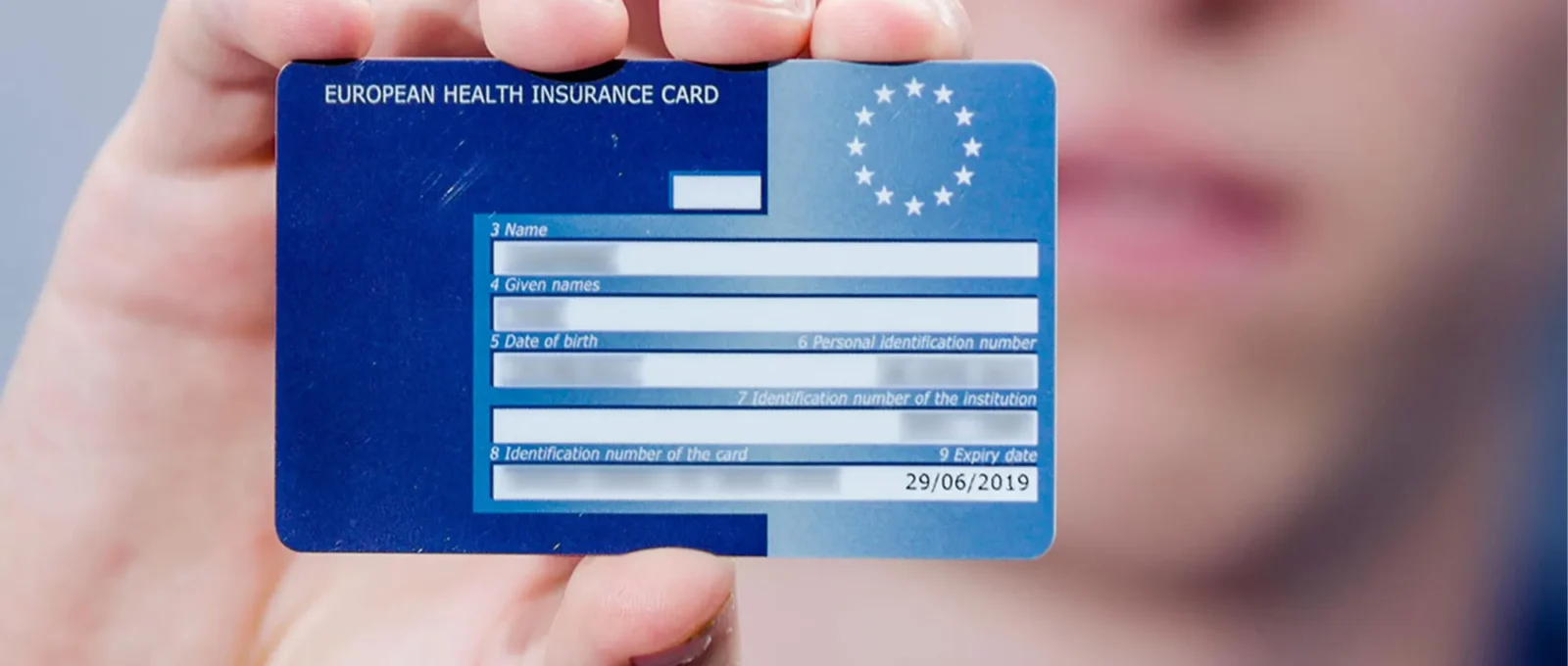

One of the first practical questions that comes up when spending time in Greece is how healthcare actually works. Whether you are visiting, staying for a few months, or slowly transitioning into life here, the European Health Insurance Card or EHIC in Greece often comes up early in the conversation.
Recently, I had a check-up at a private doctor, and I was asked for my EHIC to simplify the process of registering me in the system and issuing a prescription. That experience reminded me how useful the card can be, especially in emergencies, but also how important it is to understand exactly what it covers.
What is the EHIC and when does it apply in Greece?
The European Health Insurance Card allows EU citizens to access public healthcare in another EU country under the same conditions as local residents. In Greece, this means you can receive medically necessary treatment during a temporary stay.
It is designed for visitors, not as a long-term healthcare solution for residents, but it plays an important role, especially in emergencies.
How to apply for the EHIC
Applying for an EHIC is straightforward and free. If you are already an EU citizen, you can request it through your home country’s health authority or social security office. Many countries now allow you to apply online and even receive a digital version to keep on your phone.
Before travelling, make sure your card is valid and that you have your personal details ready, including your national health number if required. Having the card, whether physical or digital, ensures you can access treatment without unnecessary delays.
What kind of healthcare does the EHIC cover?
The EHIC in Greece gives access to public healthcare services. This includes emergency treatment and any care deemed medically necessary during your stay.
Treatment is provided through public hospitals and state health centres, which form part of the national healthcare system. You are treated under the same rules and conditions as Greek citizens using the public system.
What does the EHIC not cover?
This is where expectations often need resetting.
The EHIC in Greece does not cover private hospitals or private clinics, which are widely used in Greece. It also does not cover elective treatment, planned medical care, or healthcare once you become a long-term resident.
It is not a substitute for private insurance and does not replace registering with the Greek system if you decide to live here permanently.
How does public healthcare work in Greece?
Greece has a national public healthcare system known as ESY. Public hospitals are found in all major cities, with health centres serving smaller towns and rural areas, including much of the Peloponnese.
The quality of care is generally high, particularly when it comes to doctors and medical expertise. That said, the system can be stretched, and waiting times vary depending on location and season. In larger hospitals, English is commonly spoken, especially in emergency departments.
Do you pay anything when using the EHIC in Greece?
One of the most common questions is about costs.
Hospital treatment and emergency care under the public system are provided under the same conditions as for Greek citizens. When it comes to prescribed medication, patients usually contribute part of the cost.
When using the EHIC, patients pay a small co-payment for prescribed medicine, with the remaining cost covered by the public system. Prescriptions must be issued by a public doctor and filled at a local pharmacy.
How do prescriptions work in practice?
If you see a doctor in a public hospital or health centre, they can issue an electronic prescription. This can then be filled at almost any pharmacy.
Pharmacies play an important role in daily healthcare in Greece. Pharmacists are accessible, knowledgeable, and often the first point of advice for minor issues. Even with the EHIC, prescriptions follow the same contribution structure used by Greek residents.
Is the EHIC enough if you are staying in Greece long-term?
For short stays and temporary visits, the EHIC is extremely useful. For long-term living, it is not enough on its own.
If you move to Greece permanently, registering for an AMKA number (social security number) and entering the Greek healthcare system becomes essential. At that stage, private health insurance is also commonly used, either as a supplement or as a primary option.
Read more about Getting a Greek Tax Number here
Why do many EU citizens use a mixed approach?
In reality, many EU citizens in Greece rely on a combination of options.
The EHIC is kept for emergencies and public hospital care, while private doctors are used for routine appointments, faster access, or specialist visits. Private consultations are often affordable, particularly outside major cities, and appointments are usually easy to arrange.
This hybrid approach reflects how healthcare is actually used day to day.
What should you do before relying on the EHIC in Greece?
Before arriving, make sure your EHIC is valid and up to date. Carry it with you along with identification, and know where your nearest public hospital or health centre is located.
If you are staying outside large cities, especially in more rural parts of the Peloponnese, it is worth understanding what facilities are nearby and how far the nearest hospital is.
So, do you really need an EHIC in Greece?
Yes, absolutely. The EHIC in Greece is an important safety net and gives EU citizens access to public healthcare when it matters most.
At the same time, it is not a complete healthcare solution. It works best as part of a wider setup, especially if you are spending extended periods in Greece or planning a longer-term move.
Understanding how it fits into the Greek system allows you to navigate healthcare here with far more confidence and far fewer surprises.